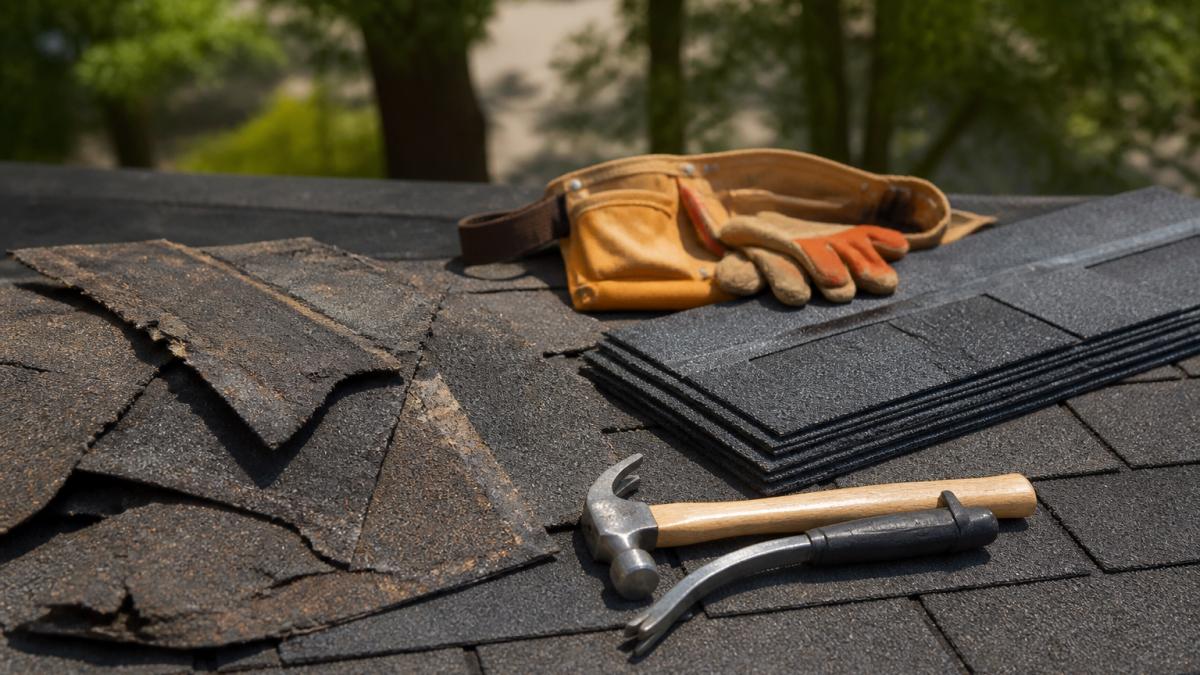
 blog
blog
Choosing Between Roof Repair and Replacement: 2026 Guide
Table of Contents
- Roof Repair vs. Roof Replacement: A Side-by-Side Comparison
- Signs You Need a New Roof (and Signs You Don't)
- Roof Damage Assessment: What a Pro Looks For
- Roof Lifespan by Material: Know Your Remaining Service Life
- The 25% Rule and Other Repair vs. Replacement Guidelines
- Your Roof Inspection Checklist Before You Decide
- Insurance, Warranties, and Financing for Roof Work
- Conclusion: Making the Call on Repair or Replacement
- Frequently Asked Questions
Last Updated: October 6, 2026
Roof Repair vs. Roof Replacement: A Side-by-Side Comparison
Choosing between roof repair and replacement comes down to one question: how much of the roof is still sound? Isolated damage on a roof with years left means repair. Widespread damage, a roof near the end of its life, or leaks that keep returning mean replacement.
Most homeowners wait until water drips through the ceiling, the expensive way to learn. Roof problems start small, spread quietly, and show up as stains, curling shingles, or a rising energy bill.
Below, we cover damage signs, roof lifespan by material, inspection steps, and what insurance will and will not cover.
| Factor | Repair | Replacement |
|---|---|---|
| Best when | Damage is isolated | Damage is widespread |
| Roof age | Under 15 years | Near or past lifespan |
| Upfront cost | Lower | Higher |
| Long-term value | Short-term fix | Decades of protection |
| Timeline | Often a day | Several days |
| Insurance | Sometimes covered | Often covered after storms |
Signs You Need a New Roof (and Signs You Don't)
A roof needs replacing when damage covers a large area or the roof is past its expected lifespan. It needs repair when the problem is small, recent, and contained. The trick is telling those apart before you call anyone.
Signs replacement may be the better path:
- Missing, cracked, or curling shingles across multiple sections
- Granule loss that leaves shingles looking bare and gray
- Recurring leaks in different spots year after year
- Sagging rooflines or soft spots in the decking
- Daylight showing through the attic boards
Signs repair is likely enough:
- A single leak around a chimney or vent
- A handful of damaged shingles after a storm
- Flashing that has pulled loose in one spot
- A roof under 15 years old with otherwise solid shingles
One or two of these signs rarely means a full replacement. Several at once usually does.
Roof Damage Assessment: What a Pro Looks For
A roof damage assessment is a top-to-bottom inspection of the shingles, flashing, underlayment, and decking to find visible damage and hidden weak points, the things homeowners cannot see from the ground.
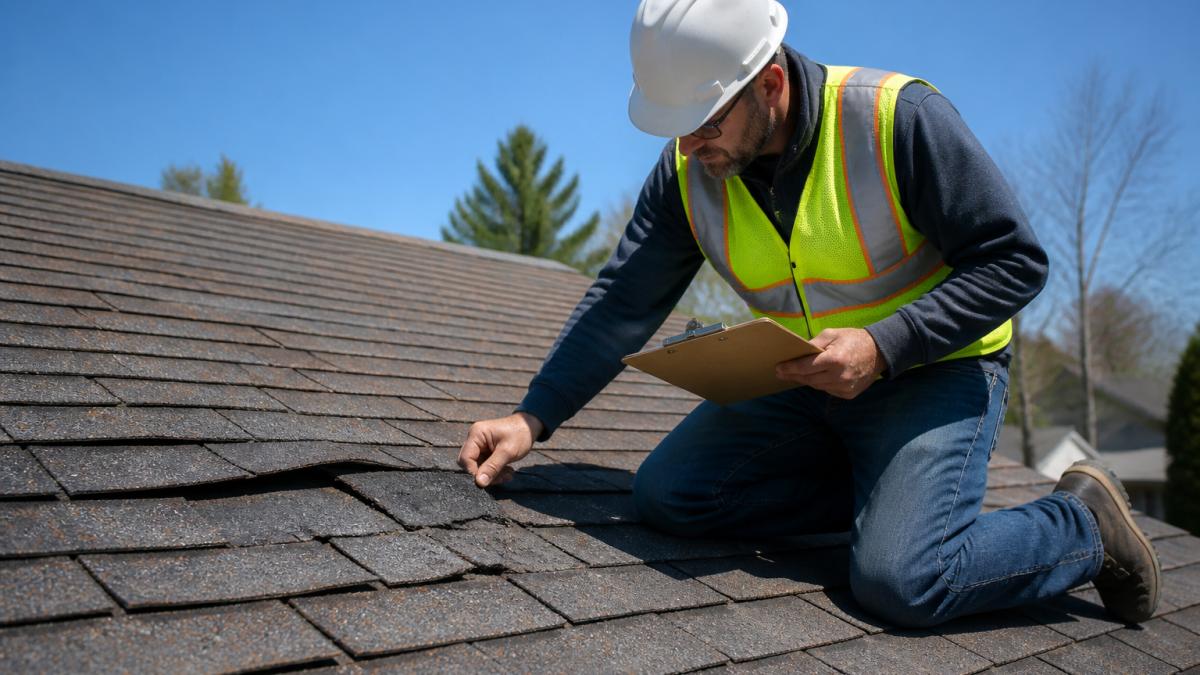
Here is what we look at during an inspection:
- Shingle condition: curling, cracking, and granule loss
- Flashing: seals around chimneys, vents, and valleys
- Underlayment: the water barrier beneath the shingles
- Roof decking: soft spots or signs of rot
- Attic space: stains, moisture, and ventilation gaps
- Drainage: gutters and how water leaves the roof
The NRCA roof inspection guidance stresses checking the whole roofing system, not just the shingles. A leak often starts at a flashing joint, not the field of the roof.
Roof Lifespan by Material: Know Your Remaining Service Life
Roof lifespan depends on material, climate, and maintenance. Knowing your roof's age against its expected life tells you whether repair is a stopgap or a real fix.
| Material | Typical Lifespan | Best For |
|---|---|---|
| Asphalt shingles | 15-30 years | Most homes |
| Metal | 40-70 years | Long-term value |
| Tile | 50+ years | Warm, dry climates |
| Flat roof (membrane) | 10-20 years | Low-slope roofs |
| Wood shakes | 20-30 years | Rustic styles |
Here in our area, lake-effect snow and ice take a toll. Freeze-thaw cycles work shingles loose and force water under the edges.
If your asphalt roof is 20 years old and showing damage, repair buys time but not much. If it is 8 years old with one bad spot, repair makes sense.
The 25% Rule and Other Repair vs. Replacement Guidelines
The 25% rule is a common industry guideline: if repairs would cost more than about a quarter of a full replacement, or more than a quarter of the roof is damaged, replacement is usually smarter. It is a starting point, not a hard law.
Other guidelines worth knowing:
- Age plus damage: past 75% of expected lifespan with real damage points to replacement
- Repair frequency: three or more repairs in a few years means the roof is failing
- Remaining service life: if the roof has under five years left, do not sink money into repairs
- Hidden damage: once underlayment or decking is compromised, patching rarely holds
The math matters: a repair costing a fraction of replacement is worth it if it buys five or more years, but a repair costing half of replacement on a roof near the end of its life is money wasted.
Your Roof Inspection Checklist Before You Decide
A checklist is only useful if it ends in a decision.
Step 1: Document the roof's baseline.
- Note the roof's age, material, and number of layers (a second layer changes cost and feasibility)
- Record the installation date, or estimate from purchase records
- Identify the roof's slope and whether it is low-slope (membrane) or steep-slope
Step 2: Map the damage.
- List every leak, stain, or damaged area with its location
- Estimate the damaged area as a share of the total roof surface
- Check the attic for moisture, staining, daylight, and damp insulation
- Inspect flashing at chimneys, vents, valleys, and sidewalls
- Check gutters and downspouts for granules, debris, and standing water
- Photograph all visible damage, inside and out, before anyone touches the roof
Step 3: Tally the history.
- Count how many repairs the roof has had in the last five years
- Note whether leaks recur in the same spot or appear in new places
- List any prior insurance claims tied to the roof
Step 4: Get comparable estimates.
- Request two written estimates separating labor, materials, tear-off, decking, and disposal
- Ask each contractor to state the scope plainly: what is replaced, patched, or left alone
- Ask what the estimate excludes (permits, decking, ventilation upgrades)
The decision framework.
Once the facts are in, run this sequence:
Book my free Roof Quote Today →
- Is the damage area small and contained? If damage covers roughly a quarter or less of the roof and the rest is sound, repair is usually viable.
- Is the roof past most of its expected service life? If it is past roughly 75% of its expected lifespan and showing real damage, replacement usually wins.
- Are leaks recurring or spreading? Three or more repairs in a few years, or leaks in new locations, point to system-wide failure.
- Is the underlying system compromised? If underlayment, decking, or flashing is failing across multiple areas, patching the surface will not hold.
- Does the repair buy meaningful time? A repair that buys five or more years is usually worth it. A repair on a roof with under five years left is money spent on borrowed time.
If you answer "yes" to the first question and "no" to the rest, repair is the better call. If you answer "no" to the first and "yes" to two or more others, replacement is stronger.
A good estimate breaks down labor, materials, and the scope of work. The FEMA guidance on roof damage documentation recommends photographing damage before any work begins, especially for insurance claims.
Insurance, Warranties, and Financing for Roof Work
Insurance, warranties, and financing each change the repair-versus-replacement math.
How a storm-damage claim actually works.
The claim process usually runs in this order:
- Document the damage with photos and dates before any temporary repairs.
- File the claim and get a claim number.
- Meet the adjuster on the roof if possible, with your photos and notes in hand.
- Review the adjuster's scope against your own documentation and your contractor's assessment.
- Negotiate or supplement if the scope misses damage you can document.
Your deductible applies before the insurer pays.
A key distinction: many policies pay to repair or replace damaged sections to match, not the entire roof.
How warranties interact with your decision.
Two warranties matter, and they cover different things:
- Manufacturer's warranty covers defects in the shingles or materials themselves. It typically requires professional installation and may be prorated by age.
- Workmanship warranty covers the installation. It is only as good as the contractor's willingness and ability to honor it.
If you repair, ask whether it voids or preserves the manufacturer's warranty.
If you replace, ask whether the new warranty is transferable and what maintenance it requires.
How financing changes the math.
Two things to watch:
- Total cost, not monthly payment. A longer term lowers the payment but raises the total interest paid. Compare the total cost of the financed replacement against the cost of repairing now and replacing later.
- Timing of the replacement. If you finance a replacement now, you avoid paying for a repair now and a replacement soon after. If you repair and finance the replacement in a few years, you may pay interest on both.
Putting it together.
A covered storm claim often tips the decision toward replacement, since the insurer pays part of the work.
Conclusion: Making the Call on Repair or Replacement
The decision comes down to damage size, roof age, and how much life is left. Small, isolated damage on a young roof means repair; widespread damage, a roof near the end of its life, or leaks that keep returning point to replacement.
If you are unsure, get a professional assessment before you spend a dollar. Roof King, LLC offers free roof quotes, a Storm-Ready Roof inspection, and full insurance claim assistance.
Get started with Roof King, LLC and get a clear, honest answer on whether to repair or replace.
Frequently Asked Questions
What is the 25% rule in roofing?
The 25% rule is a common guideline stating that if damage covers more than a quarter of your roof's surface, replacement usually makes more financial sense than repeated repairs. The logic is simple: once damage spreads past that threshold, patch repairs tend to multiply and the underlying roofing system is often compromised. The rule is not a building code, so treat it as a starting point. A roof damage assessment from a licensed roofing contractor gives you the real picture for your roof.
Is it better to repair or replace a roof?
It depends on roof age, how much of the roof is affected, and whether problems keep coming back. A young roof with isolated damage, such as a few missing shingles after a storm, is usually a good repair candidate. A roof near the end of its expected lifespan, or one with widespread granule loss, recurring leaks, or failing flashing and underlayment, is better replaced. Weigh the repair estimate against the replacement estimate and the remaining service life you get from each.
How do I know when a roof needs to be replaced?
Watch for shingles that are curling, cracking, or losing granules, leaks that return after repairs, and sagging areas that hint at structural damage. Age matters too: if your asphalt shingle roof is 20 years or older and problems are piling up, replacement is likely the smarter path. A professional roof inspection confirms what you are seeing and checks the parts you cannot see from the ground, including flashing, underlayment, and roof decking.
Can an old roof be repaired instead of replaced?
Sometimes, yes. If the damage is isolated and the rest of the roof is in decent condition, a targeted repair can extend roof life for a few more years. But when an old roof has widespread damage, repeated repairs, or a failing underlayment layer, repairs only delay the inevitable and often cost more over time. Ask your roofing contractor to compare the repair cost against the replacement cost and explain how much service life each option actually buys.