 Listicle
Best Roofing Materials for the Michigan Climate
Last Updated: November 17, 2026
Quick Summary
The best roofing materials for the michigan climate are architectural asphalt shingles for most homes and standing seam metal for heavy snow areas. Both shed water fast and handle extreme cold, while slate, tile, and wood demand structural capacity and more maintenance.
- Architectural asphalt shingles last 20-30 years and resist wind uplift and ice better than three-tab.
- Standing seam metal roofing lasts 40-70 years and sheds snow well thanks to concealed fasteners.
- A continuous ice-and-water shield at least two courses up from the eave helps prevent ice dams.
- Lake-effect belts see heavier snowfall, making metal roofing and steep pitches the strongest case.
- Compare lifecycle cost rather than sticker price, since a cheap roof replaced twice can cost more.
Table of Contents
- What Michigan Weather Does to a Roof
- Quick Comparison: Roofing Materials for the Michigan Climate
- Asphalt Shingles: The Best Shingles for Cold Climates and Everyday Budgets
- Metal Roofing for Snow and Ice: Standing Seam Performance
- Slate, Tile, and Wood: Long-Lived and Heavy Options
- Ice Dam Prevention Roofing: Design Details That Matter
- Roof Underlayment for Ice Dams and the Flat-Roof Materials That Pair With It
- Matching a Material to Your Roof, Home, and Region
- Frequently Asked Questions
What Michigan Weather Does to a Roof
Lake-effect snow, ice dams, and freeze-thaw cycles decide which roofing materials survive here. Roof failures in Michigan often trace back to material choice and installation detail rather than luck.
Michigan winters test a roof in three ways. Snow sits and refreezes, ice backs up under the shingles, and repeated thaw cycles push water into every seam. Add summer humidity and algae growth, and you have a year-round stress test.
The Michigan climate rewards materials that shed water fast, handle extreme cold, and resist moisture. Below, we compare the best roofing materials for the Michigan climate by durability, maintenance, and fit.
FEMA guidance on ice dams and winter roof damage
Quick Comparison: Roofing Materials for the Michigan Climate
No single material wins everywhere. The table below summarizes how each option handles snow, ice, and cold.
| Material | Snow and Ice Performance | Lifespan | Maintenance | Best For |
|---|---|---|---|---|
| Architectural asphalt shingles | Good, with ice barrier | 20-30 years | Low | Most homes |
| Standing seam metal | Excellent snow shedding | 40-70 years | Very low | Heavy snow areas |
| Slate | Excellent, very heavy | 50-100 years | Low | Historic and high-end homes |
| Wood shakes | Fair, needs care | 25-40 years | High | Rustic styles |
| Clay and concrete tile | Good, brittle in freeze | 40-50 years | Low | Low-snow regions |
| EPDM rubber | Good on flat roofs | 20-30 years | Moderate | Flat and low-slope roofs |
| Solar roofing | Good, adds weight | 25-30 years | Low | Sun-exposed roofs |
Lifespan
Asphalt Shingles: The Best Shingles for Cold Climates and Everyday Budgets
Architectural asphalt shingles are a common choice for many Michigan homes because they balance cost, durability, and cold-weather performance.
The best shingles for cold climates share three traits: a heavier mat, algae-resistant granules, and a manufacturer warranty that holds up in freeze-thaw conditions. Standard three-tab shingles work, but architectural shingles resist wind uplift and ice better.
Architectural vs. Standard Shingles
Architectural shingles are thicker and heavier than standard three-tab products. That extra weight improves wind resistance and helps the shingle stay flat through temperature swings.
Standard shingles cost less up front but tend to fail sooner in heavy snow load. If you plan to stay in your home more than ten years, architectural shingles are the smarter buy.
Watch out: skipping the ice-and-water shield at the eaves is a common installation shortcut that can lead to ice dam leaks.
Metal Roofing for Snow and Ice: Standing Seam Performance
Metal roofing for snow and ice is the strongest performer in heavy snow country. Standing seam panels have concealed fasteners, which helps snow slide off.
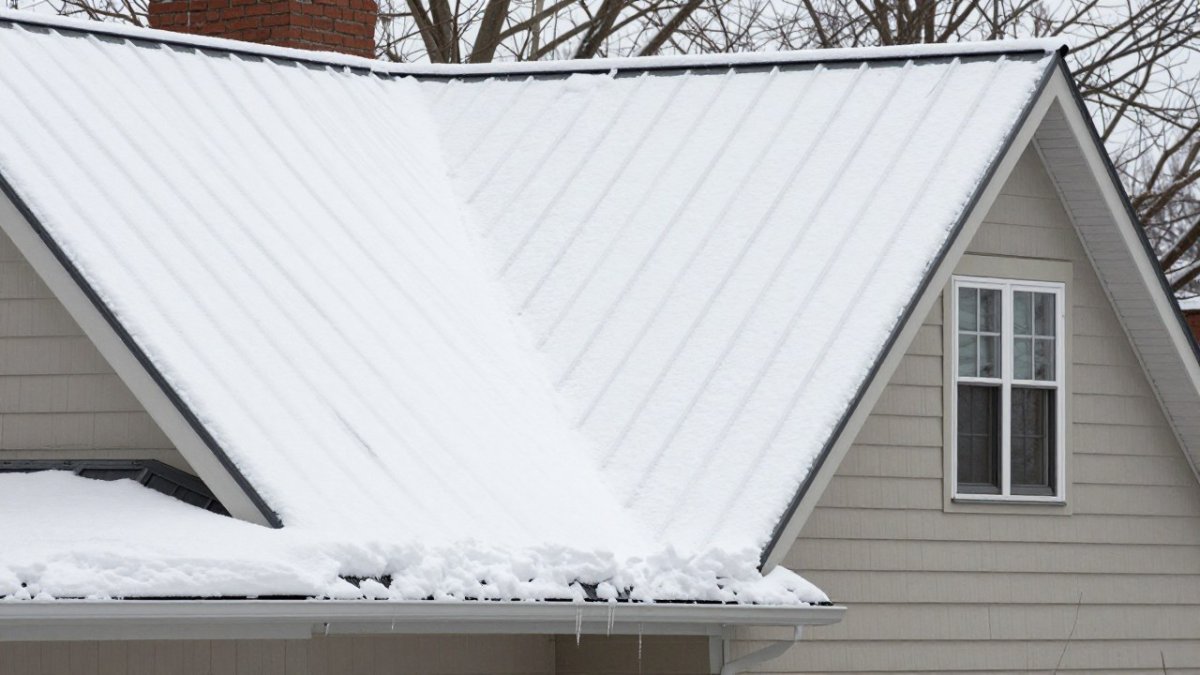
The trade-off is cost and noise. Metal costs more than asphalt, and without proper underlayment and attic insulation, rain and hail sound louder inside.
Where metal shines is longevity and low maintenance.
Oak Ridge National Laboratory research on cool metal roofing
Slate, Tile, and Wood: Long-Lived and Heavy Options
Slate, clay tile, concrete tile, and wood shakes all appear on lists of cold-climate roofing, but they behave very differently under snow load, freeze-thaw movement, and moisture. Each one also imposes structural and maintenance requirements that asphalt and metal do not, so the decision is less about picking the "best" material and more about whether your roof structure and budget can support it.
Slate: Longest Life, Heaviest Load
Slate is among the longest-lived roofing materials commonly installed on homes when the installation is sound. It handles cold well because slate is dense, water-resistant, and does not expand and contract much with temperature. Snow sheds from a steep slate roof.
The constraints are structural and economic. Natural slate is heavy, commonly several times the weight per square foot of asphalt shingles, so a roof must be framed and sheathed to carry it, and many older homes need reinforcement before a slate installation. Slate is also brittle: foot traffic during installation or maintenance can crack individual tiles, and a cracked tile is a leak path until it is replaced. Repair is possible tile by tile.
Synthetic slate products made from rubber, plastic, or fiber cement imitate the look at lower weight and lower cost, and they avoid some of the breakage risk. They are not equivalent to natural slate in lifespan, but they let homeowners on lighter framing get a similar appearance.
Watch out: installing natural slate on a roof framed for lighter materials can overload the structure, so a structural assessment is advisable before committing.
Clay and Concrete Tile: Cold-Weather Caveats
Clay and concrete tile are durable, fire-resistant, and long-lived, with expected service lives in the 40-to-50-year range for concrete and longer for well-made clay. Both handle snow load well because the tile is strong in compression.
The cold-weather risk is brittleness. Clay tile in particular can crack when freeze-thaw movement shifts the roof deck or when the tiles are walked on in cold weather. Concrete tile is less brittle but heavier, and both materials require a roof structure rated for the load. In regions with deep snow and repeated freeze-thaw, tile installations depend heavily on proper underlayment and fastening, because a cracked tile lets water into the assembly and the underlayment becomes the real water barrier.
Tile also performs differently on different slopes. Most tile profiles need a minimum pitch to shed water, and low-slope installations require special underlayment systems.
Wood Shakes and Shingles: Maintenance-Intensive
Wood shakes and shingles, typically cedar, offer a natural look that suits rustic and historic homes, and wood has a long history in cold climates. Expected service life is commonly cited at 25 to 40 years, but that range depends heavily on maintenance.
Wood is the highest-maintenance option in this group. It absorbs moisture, supports mold and rot if it stays wet, and needs periodic cleaning, treatment, and sometimes replacement of individual shakes. In snow country, snow sitting on wood for extended periods accelerates decay, and ice damming at the eaves is a particular risk because wood roofs are often installed on older homes with limited ventilation. Some jurisdictions restrict wood roofing because of fire risk, so check local code before planning a wood roof.
What These Materials Have in Common
All three are heavy, all three reward a steep pitch that sheds snow, and all three depend on the underlayment and flashing beneath them for watertightness. None is a good fit for a roof that cannot carry the load or a homeowner who wants minimal maintenance. Structure, pitch, local code, and budget decide whether any of them make sense.
- Slate: 75-100+ years for natural slate, very heavy, premium installed cost, repairable tile by tile
- Clay tile: long-lived, brittle in freeze-thaw, heavy, needs structural capacity
- Concrete tile: 40-50 years, heavy, less brittle than clay, depends on underlayment
- Wood shakes and shingles: 25-40 years, high maintenance, moisture and fire-code considerations
Ice Dam Prevention Roofing: Design Details That Matter
Ice dam prevention roofing starts with design, not material alone. A continuous ice-and-water shield along the eaves, proper roof pitch, and balanced attic ventilation stop ice dams before they form.
The details that matter most:
- Ice-and-water membrane at least two courses up from the eave
- Sealed valleys and step flashing at walls
- Ridge and soffit ventilation to keep the deck cold
- Insulation that stops warm air from melting snow on the roof
Get these wrong and even premium shingles leak. For a deeper look, see our guide to preventing ice dams on your roof and how to prevent ice dam damage in Michigan homes.
Roof Underlayment for Ice Dams and the Flat-Roof Materials That Pair With It
Roof underlayment for ice dams is the hidden layer that decides whether water reaches your deck. A self-adhering ice-and-water shield is commonly used in cold climates to resist water backup.
On flat and low-slope roofs, membranes do the water-shedding work. EPDM rubber roofing handles cold well and seals around penetrations. TPO membrane reflects heat and resists punctures. Modified bitumen offers a tough, layered surface that holds up to foot traffic.
Flat roofs need the right membrane and clean drainage. Standing water is the enemy, and a clogged drain defeats the best material.
Matching a Material to Your Roof, Home, and Region
Most guides treat the state as one climate. It is not. Snow load, lake-effect exposure, and freeze-thaw frequency vary across the state. Material choice should follow the roof, the structure, and the local exposure, not the other way around.
Regional Differences That Change the Answer
The state's snow exposure is not uniform. Lake-effect belts downwind of the Great Lakes see substantially heavier snowfall than inland areas, and the pattern repeats in both the northern and western parts of the state. In those belts, snow sits on roofs longer, ice dams form more readily, and the case for metal roofing and steep pitches is strongest. Inland and southern areas with less snow can lean on architectural asphalt shingles without giving up much performance.
The Upper Peninsula combines heavy snow with long cold stretches, which puts a premium on ice-and-water shielding, ventilation, and materials that tolerate repeated freeze-thaw. Southern Michigan sees more freeze-thaw cycling, snow melts and refreezes more often, which stresses seams, flashing, and any material that absorbs water. The practical takeaway: ask what the local snow load and freeze-thaw pattern are before choosing a material, rather than assuming a statewide recommendation applies.
Roof and Home Characteristics That Decide the Choice
- Roof pitch: steep roofs shed snow and suit slate, tile, and metal; low-slope roofs need membrane systems such as EPDM, TPO, or modified bitumen.
- Structural capacity: slate, tile, and concrete are heavy and may require reinforcement; asphalt and metal are lighter.
- Existing structure and tear-off vs. overlay: overlaying shingles saves money up front but adds weight and can trap moisture; a tear-off allows inspection of the deck and proper underlayment.
- Architectural style and historic status: slate and wood suit historic homes, but historic districts may have their own review requirements.
- Budget horizon: a homeowner planning to stay 20 years should weigh lifecycle cost; a homeowner selling in three years may reasonably choose the lower upfront option.
Lifecycle Cost, Not Sticker Price
The number most homeowners miss is lifecycle cost. A cheaper roof replaced twice often costs more than one metal or slate roof installed once, once maintenance and replacement are counted. Compare installed cost, expected service life, maintenance assumptions, and replacement frequency side by side rather than comparing upfront quotes. A roof that lasts twice as long but costs twice as much is roughly cost-neutral on a per-year basis, and it avoids a second tear-off and disposal cycle.
Codes, Permits, and Insurance
Building codes and permits apply to roof replacements, and local requirements can affect material choice, fire ratings for wood roofs, snow-load design values, and historic-district rules are common examples. Check with the local building department before ordering materials. Insurance is the other practical lever: impact-rated shingles and certain hail-resistant products can qualify for premium discounts with some carriers, and a roof in poor condition can affect coverage.
When you are ready to compare options or get a quote, explore our roof replacement service or contact our team. For winter upkeep, our roof maintenance tips for Michigan winters keep your investment protected.
Michigan weather will find every weak point in a roof, so the material and the crew installing it both matter. Roof King LLC brings lifelong local knowledge of the Michigan climate, honest assessments, and insurance claim support when storm damage hits. Our Storm-Ready Roof inspection and maintenance package helps you catch problems before winter does. Get started with Roof King LLC and protect your roof through every season.
Frequently Asked Questions
What type of roof shingles are best for Michigan?
Architectural asphalt shingles are the most practical pick for most Michigan homes. They generally cost less than metal or slate. Look for algae-resistant granules and a manufacturer warranty that covers high-wind and ice-dam performance. Standard three-tab shingles cost less upfront but wear faster through freeze-thaw cycles.
Can metal roofing help prevent ice dams?
Metal roofing for snow and ice helps because smooth standing-seam panels shed snow faster than granular shingles, so less meltwater sits at the eaves. It does not stop ice dams on its own. Dams form when warm attic air melts snow that refreezes at the cold eave. Pair metal with proper attic insulation, ventilation, and a self-adhering underlayment at the eaves to address the cause, not just the symptom.
Which roofing materials hold up best to heavy snow and ice?
Slate is among the longest-lasting options but is heavy and costs more. Standing-seam metal sheds snow well. Architectural asphalt shingles are a cost-effective choice for many homes. EPDM and TPO membranes suit flat and low-slope roofs where shingles cannot be used.
How does roof ventilation affect ice dams?
Ventilation keeps the underside of the roof deck cold so snow melts evenly from sun exposure rather than from attic heat. A balanced intake-and-exhaust system, with soffit vents feeding ridge vents, holds deck temperatures closer to outdoor air. Combined with attic insulation and ice-and-water shield underlayment at the eaves, it is the most reliable way to reduce ice dam prevention roofing problems before they start.