 How-to
Roof Maintenance Tips for Michigan Winters
Table of Contents
- Why Michigan Winters Test Your Roof Differently
- Your Winter Roof Maintenance Checklist Before the First Snow
- How to Prevent Ice Dams Before They Start
- Roof Snow Removal Safety: What to Do and What to Avoid
- Signs of Roof Damage in Winter You Should Never Ignore
- Roof-Type-Specific Advice for Michigan Homes
- When to DIY and When to Call a Roofer
- Frequently Asked Questions
Last Updated: October 16, 2026
Why Michigan Winters Test Your Roof Differently
Freeze-thaw cycles are the quiet killer of roofs in our region.
That pattern defines roof maintenance tips for Michigan winters. Snow sits on a cold deck for weeks. Sun melts the top layer. Meltwater runs to the eaves, hits a surface still below freezing, and stops.
At Roof King LLC, we inspect roofs across Tecumseh, Adrian, and Jackson all winter, and the same failure points show up again and again:
- Ice building along the eaves and in valleys
- Meltwater backing up under shingles
- Attic heat escaping and warming the roof deck
- Clogged gutters and downspouts blocking drainage
The Insurance Institute for Business & Home Safety winter weather guidance notes that winter weather drives a large share of home damage claims each year.
Here is the good news. Below, we cover what to inspect, how to prevent ice dams, how to remove snow without wrecking your roof, and when to call a professional.
Your Winter Roof Maintenance Checklist Before the First Snow
A winter roof maintenance checklist works best when you finish it before the first hard freeze. Once snow covers the roof, you lose the ability to spot small problems early. In most of the Lower Peninsula, that means wrapping up by late October or early November. In the western counties that catch lake-effect snow, the window closes sooner, and a single early-November band can bury a roof before you have cleared the gutters.
Work through these steps in order:
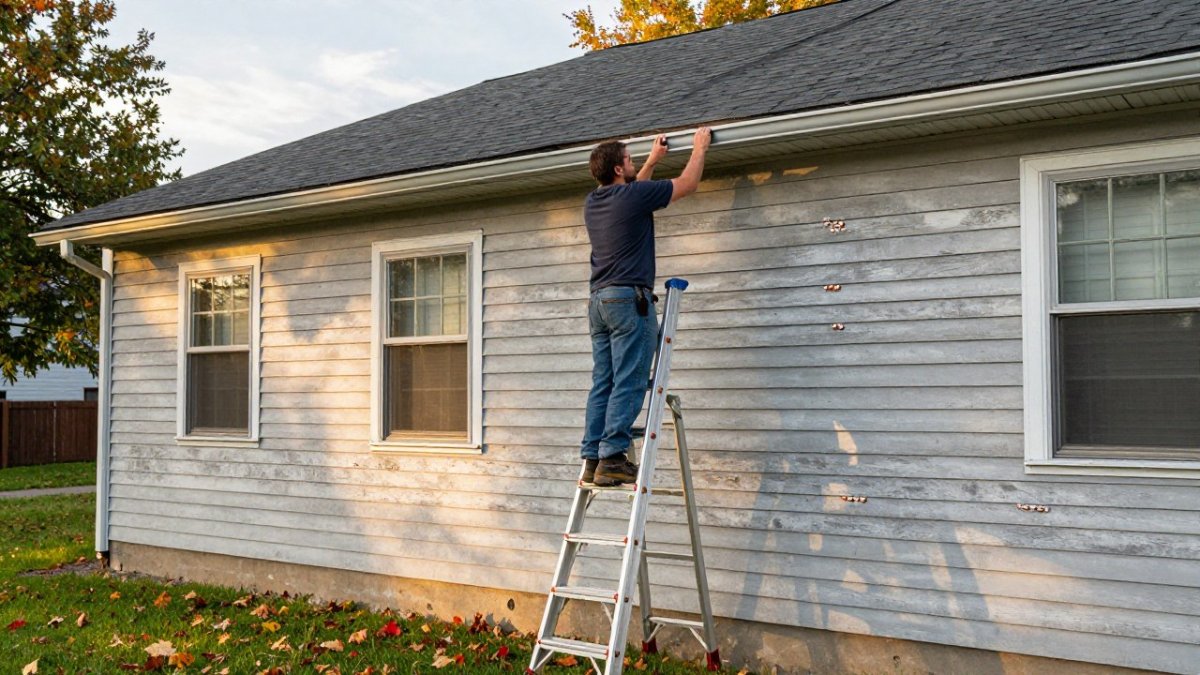
- Inspect roof shingles from the ground with binoculars. Look for curled, cracked, or missing shingles and loose granules in gutters.
- Check roof flashing around chimneys, vents, and skylights. These roof penetrations are the most common leak points.
- Clean gutters and downspouts. Clear leaves, twigs, and debris so meltwater has a path off the roof.
- Look at roof edges and eaves for lifted or damaged material.
- Check attic insulation for gaps, thin spots, or compressed sections.
- Verify attic ventilation so the roof deck stays cold.
- Seal air leaks around attic hatches, pipes, and light fixtures.
- Trim overhanging branches that could drop snow or ice onto the roof.
Here is what matters most:
| Problem | Fix | Why It Matters |
|---|---|---|
| Clogged gutters | Clear debris, flush downspouts | Blocks meltwater drainage |
| Warm attic | Add insulation, seal air leaks | Drives ice dam formation |
| Poor ventilation | Clear vents, add intake/outtake | Keeps roof deck cold |
| Loose flashing | Reseal or replace | Allows water infiltration |
| Missing shingles | Repair before snow | Exposes underlayment |
How Regional Weather Changes Your Priorities
Not every part of the state gets the same winter, and the checklist should shift with the forecast.
- Lake-effect snow belts (the western and northern counties downwind of the big lakes) can collect several feet of snow in a single event. There, snow load and roof-raking frequency matter more than almost anything else on the list.
- Inland and southern counties see more freeze-thaw cycling than deep accumulation. Meltwater that refreezes at the eaves is the dominant risk, so drainage and attic heat control move to the top.
- Anywhere with mature trees should treat fall gutter clearing as non-negotiable. A single clogged downspout turns a routine thaw into an interior leak.
A Simple Seasonal Schedule
Organize the work so nothing gets missed:
- Fall (before the first freeze): full inspection, gutter and downspout clearing, attic insulation and air-sealing check, branch trimming.
- After every major storm: ground-level look for missing shingles, shifted flashing, and new icicle formation in the same spot.
- Mid-winter thaw: re-check gutters for ice blockages and watch interior ceilings for new stains.
- Spring: re-inspect the roof, gutters, and attic once snow clears to catch damage before the next season.
How to Prevent Ice Dams Before They Start
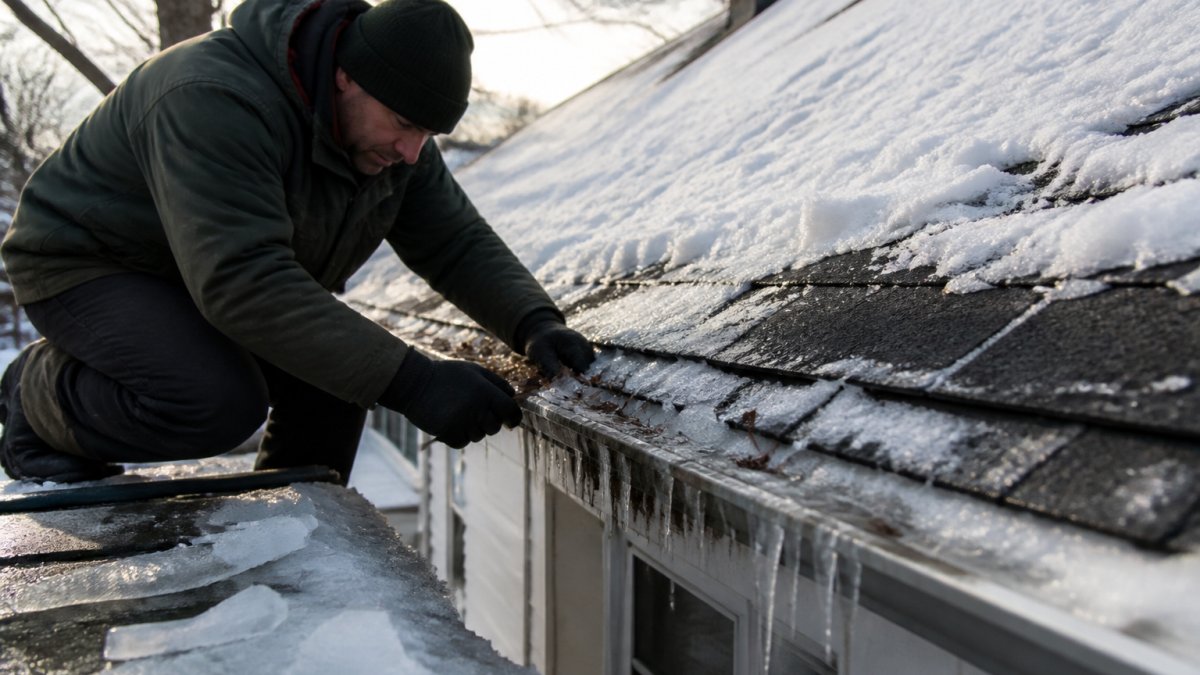
Ice dams form when heat escapes into the attic, warms the roof deck, melts snow from underneath, and sends meltwater to the cold eaves where it refreezes. The ice grows into a dam.
The fix is to keep the entire roof surface cold. That means three things working together:
- Proper insulation to stop heat from rising into the attic
- Attic ventilation to move warm, moist air out
- Air sealing to close the gaps that let heat escape in the first place
Many homeowners assume icicles mean a charming winter scene. They do not. Heavy icicles usually signal heat loss and active ice buildup.
A University of Minnesota Extension guide on ice dams explains that attic bypasses and air leaks are often the real driver, not roof design alone.
You can also reduce risk from inside the house. Keep the attic cold, avoid venting bathroom or kitchen fans into the attic, and check humidity levels.
Roof Snow Removal Safety: What to Do and What to Avoid
Roof snow removal safety comes down to one rule: never put your body on a snow-covered roof. Snow load is real, but the bigger risk is a fall or a sudden slide.
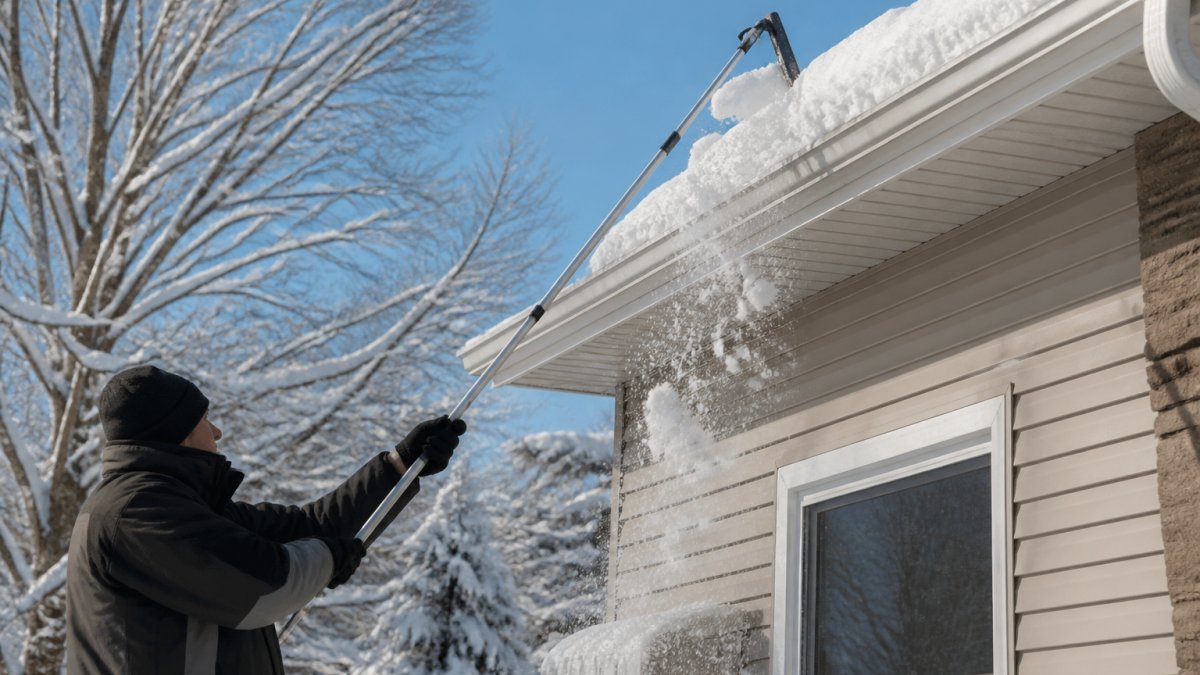
Safe snow removal steps:
- Stay on the ground. Use a long-handled roof rake with a telescoping pole.
- Pull snow, do not push it. Work from the edge downward toward you.
- Leave a thin layer. A small amount of snow protects shingles from your rake.
- Never chip at ice. Hammers, chisels, and ice picks tear shingles and flashing.
- Watch for power lines and stay well clear of them.
- Avoid working alone or during active winter storms.
What to avoid:
- Climbing onto a snow-covered or icy roof
- Using a pressure washer on shingles
- Hacking away at ice dams with sharp tools
- Letting heavy snow sit for weeks on a low-slope or older roof
Signs of Roof Damage in Winter You Should Never Ignore
Signs of roof damage in winter often show up inside the house before they show up on the roof. The roof is buried under snow, but the warning signs still reach you.
Watch for these:
- Water stains on ceilings or walls, especially near exterior corners
- Brown or yellow rings that grow after a thaw
- Sagging drywall or bubbling paint
- Daylight visible through attic roof boards
- Damp or matted insulation in the attic
- Icicles forming repeatedly in the same spot
- Granules collecting in gutters or at downspout outlets
- Visible cracks in the attic framing or around chimneys
If you spot an active leak, act fast:
- Put a bucket under the drip and move valuables.
- Photograph everything before you clean up.
- Call a roofing professional to document the source.
- Contact your insurance company once you have proof.
Do not wait for spring. Water damage spreads through insulation, drywall, and framing. A small leak in January can mean a full ceiling repair by March.
Book my free Roof Quote Today →
This is where our storm-ready roof inspection helps. We document damage with photos and notes you can hand straight to your insurer, which makes the claim process far less painful.
FEMA guidance on documenting disaster damage for insurance claims recommends photographing damage from multiple angles before any repairs begin.
Roof-Type-Specific Advice for Michigan Homes
Not every roof handles winter the same way. The right approach depends on what covers your home.
Asphalt shingle roofs are the most common here. They handle cold well, but repeated freeze-thaw cycles loosen granules and curl edges. Check for missing shingles after every major storm.
Metal roofing sheds snow faster than any other type, which lowers snow load risk. The trade-off is that sliding snow can damage gutters below. Snow guards help.
Low-slope and flat commercial roofing holds water and ice longer. Roof drains and scuppers must stay clear all winter.
Older roofs with worn flashing or patched sections need closer attention. Age plus winter stress is a rough combination.
A seasonal checklist works for every roof type:
| Roof Type | Main Winter Risk | Best Prevention |
|---|---|---|
| Asphalt shingle | Curling, granule loss | Fall inspection, prompt repairs |
| Metal | Sliding snow, gutter damage | Snow guards, clear drains |
| Flat/commercial | Ponding, blocked drains | Clear drains, professional checks |
| Older roofs | Flashing failure, leaks | Pre-winter inspection, patching |
When to DIY and When to Call a Roofer
Some winter roof tasks are safe for any homeowner. Others are not worth the risk. The trick is knowing which is which before you climb a ladder.
Safe to do yourself:
- Ground-level visual inspections
- Clearing gutters with a stable ladder in dry conditions
- Pulling snow with a roof rake from the ground
- Checking the attic for leaks and insulation gaps
Call a professional for:
- Any work on a snow-covered or icy roof
- Ice dam removal
- Flashing repair or replacement
- Missing or damaged shingle repair
- Active leaks you cannot trace
- Commercial roofing of any kind
Escalation Criteria: When DIY Stops and a Pro Starts
Use these triggers to decide, rather than guessing:
- You cannot see the problem from the ground. If the issue is only visible by getting on the roof, it is a pro job in winter.
- Water is actively entering the house. Stop the DIY attempt and call.
- The ice dam is thicker than a few inches or spans more than one roof section.
- The roof is steep, icy, or has a history of repairs. Age plus winter stress is a rough combination.
- You are unsure about anything structural, flashing, decking, or framing.
Warning Signs That Need Immediate Action
If you spot any of these, treat it as an active problem, not a spring project:
- Water stains on ceilings or walls, especially near exterior corners
- Brown or yellow rings that grow after a thaw
- Sagging drywall or bubbling paint
- Damp or matted attic insulation
- Icicles forming repeatedly in the same spot
If you have an active leak, act fast:
- Put a bucket under the drip and move valuables.
- Photograph everything before you clean up.
- Call a roofing professional to document the source.
- Contact your insurance company once you have proof.
Do not wait for spring. Water damage spreads through insulation, drywall, and framing. A small leak in January can mean a full ceiling repair by March.
This is where our storm-ready roof inspection helps. We document damage with photos and notes you can hand straight to your insurer, which makes the claim process far less painful.
FEMA guidance on documenting disaster damage for insurance claims recommends photographing damage from multiple angles before any repairs begin. That documentation is often the difference between a smooth claim and a disputed one.
Cost Context for Planning
Pricing for roof repairs and replacements depends on roof size, material, pitch, and damage extent, so we quote each job individually. We give you a clear written estimate before any work starts, and we walk you through what your insurance may cover. A professional inspection costs far less than a fall or a failed roof, and it is the right call whenever you are unsure.
Frequently Asked Questions
Should you remove snow from your roof during Michigan winters?
Yes, if snow depth reaches 6 inches or more, especially on roofs with a low slope. Use a roof rake with an extendable handle and work from the ground. Never climb onto a snow-covered roof. Clearing snow reduces the risk of ice dams and structural stress from heavy snow load.
How can you tell if an ice dam is forming?
Look for icicles along the eaves, thick ice at the roof edge, or water stains on exterior walls. Inside, check for ceiling stains, peeling paint, or musty odors in the attic. If you spot any of these signs, call a professional. Prompt action prevents meltwater from backing up under shingles and causing water damage.
What temperature is too cold to put on a roof?
Most roofing work should not be done below 40°F. Shingles become brittle in cold weather and can crack during installation. Adhesives and sealants also need warmer temperatures to cure properly. If you need a winter repair, a professional roofer can use cold-weather techniques and materials rated for lower temperatures.
When should you call a roofer about a winter roof leak?
Call as soon as you notice water stains on ceilings or walls, ice buildup that won't melt, or missing shingles after a storm. Delaying repairs lets water infiltration worsen and can lead to mold and structural damage. A professional inspection identifies the source and documents damage for insurance claims.