 How-to
How to Maintain Your Roof in Lenawee County
Last Updated: November 1, 2026
Quick Summary
The best way to protect your roof in Lenawee County is to inspect it twice a year and act quickly after storms. Routine roof maintenance catches small problems from freeze-thaw cycles, heavy snow and spring hail before they become leaks and costly repairs.
- Inspect your roof at least twice a year, in spring and fall, plus after any major storm.
- Check gutters and the attic from the ground and inside, without climbing onto the roof.
- Treat active leaks, flashing pulling away and missing shingles as same-week repairs.
- Clean gutters at least twice a year and make sure downspouts drain away from the foundation.
- Keep a maintenance log with dated photos to spot changes and support insurance claims.
Table of Contents
- How Often to Inspect a Roof in Michigan's Climate
- Roof Inspection Checklist: What to Check From the Ground and the Attic
- Signs of Roof Damage That Need Prompt Repair
- Seasonal Roof Maintenance Calendar for Lenawee County
- Booking Your Storm-Ready Roof Inspection With Roof King LLC
- Frequently Asked Questions
Roof King LLC works with homeowners across Lenawee County, and the best way to protect a roof here is to inspect it twice a year and act quickly after storms.
Good roof maintenance is mostly about routine. You do not need to climb onto the roof for most of it. Many problems show up from the ground, in the gutters and in the attic, and a little attention each season goes a long way.
How Often to Inspect a Roof in Michigan's Climate
Most homeowners should inspect their roof at least twice a year, once in spring and once in fall, and again after any major storm. Spring checks reveal winter damage from ice and snow. Fall checks prepare the roof for the cold months ahead.
Why Lenawee County Roofs Need Twice-Yearly Checks
Lenawee County's weather changes with each season. Winters bring snow and ice, springs bring wind and hail, and summers bring heat that dries out sealants. Each season wears on the roof in a different way.
A roof that gets checked twice a year gives you a clear record of its condition. You can spot a lifting shingle or a failing seam while the fix is still small and inexpensive.
- Spring: look for winter damage and debris buildup
- Fall: clear leaves and check flashing before snow arrives
- After any strong storm: inspect for missing or cracked shingles
Inspecting After Storms and Heavy Snow
Storms and heavy snow are the moments when roofs most often fail. After a severe event, take a quick look from the ground for missing shingles, bent metal, or debris on the lawn that came from the roof.
Heavy snow also needs attention. Ice dams form when melting snow refreezes at the eaves, and they can push water under shingles. Watch for icicles along the edge and damp spots on ceilings.
Roof Inspection Checklist: What to Check From the Ground and the Attic
You can do a useful inspection without ever climbing a ladder. Start on the ground with binoculars and move to the attic. Only go on the roof itself if you are comfortable and it is safe, and never work on a wet, icy or steep roof alone.
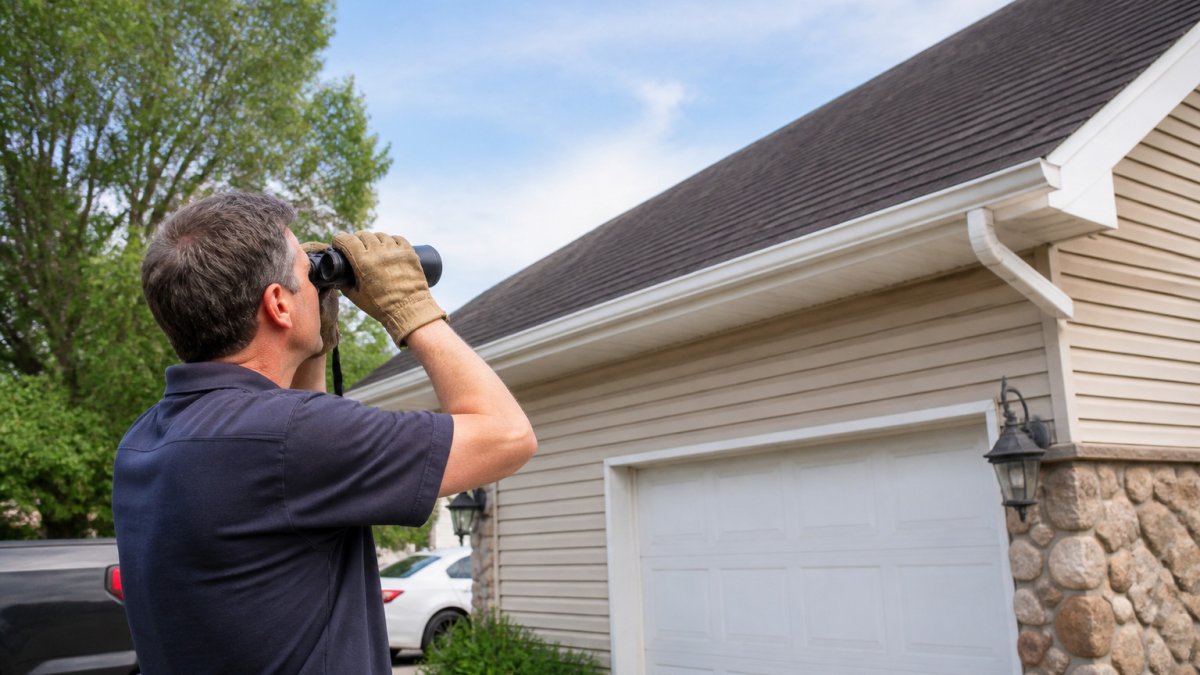
From the ground:
- Shingles that look curled, cracked or missing
- Dark streaks or heavy granule loss in the gutters
- Sagging ridgelines or uneven roof lines
From the attic:
- Water stains on the rafters or the underside of the roof deck
- Daylight showing through the roof boards
- Damp insulation or a musty smell
Keep notes and photos each time you check. A simple log makes it easier to spot changes over time.
Signs of Roof Damage That Need Prompt Repair
Not all damage is equal. The useful skill is telling routine upkeep apart from a repair that should not wait. A simple way to sort it is by what water can reach and how fast.
Handle right away (same week):
- Missing or displaced shingles that expose underlayment or deck
- Active leaks, ceiling stains that are spreading, or water dripping in the attic
- Flashing that has pulled away from a chimney, skylight, or vent
Schedule within the season:
Book my free Roof Quote Today →
- Granule loss and bare patches on aging shingles
- Curling or lifting shingle edges
- Loose or leaking gutters
Material-Specific Warning Signs
What counts as serious depends on the covering:
- Asphalt shingles: Missing tabs, heavy granule loss, and cracked or curling shingles. Granules piling up in gutters or downspouts signal the protective layer is wearing thin.
- Metal panels: Backed-out fasteners, open seams, dented panels from hail, and rust at cut edges. Hail can bruise metal even when the damage is hard to see from the ground.
- Low-slope and rubber roofing: Ponding water, seam separation, blisters, and punctures. Standing water is the main enemy here, and freeze-thaw at seams widens small openings.
Storm and Hail Damage: How Soon to Act
Hail and wind damage should be looked at within days, not months. Hail can crack shingles and bruise metal even when the damage is hard to see from the ground, and water can then get in and cause problems inside the home.
A safe response sequence after severe weather:
- Check from the ground first. Use binoculars to look for missing shingles, bent metal, and debris on the lawn that came from the roof.
- Document before you touch anything. Take dated photos of the roof, gutters, and any interior staining. Clear records help with insurance claims, so keep receipts and written estimates.
- Do not climb up on a wet, icy, or steep roof. Ground checks and attic inspections are the safe homeowner tasks; roof-surface work is for trained professionals.
- Arrange a professional assessment if you see missing shingles, dents, or interior staining, and do it before temporary fixes that could complicate a claim.
For help documenting damage, see Roof Insurance Claims.
Seasonal Roof Maintenance Calendar for Lenawee County
A calendar only helps if it matches how the weather actually arrives here. Freeze-thaw cycles are a major source of roof wear in this area: water works into small gaps during the day, freezes overnight, expands, and pries shingles and flashing apart a little more each time. That cycle repeats most often in late winter and early spring, when daytime temperatures climb above freezing and nighttime temperatures drop back below it.
Here is a practical schedule built around that pattern:
- Late winter (February-March): After the first stretch of warm days, do a ground-level check for shifted shingles, ice dam staining at the eaves, and gutters that have pulled loose under snow load. This is when freeze-thaw damage first shows.
- Early spring (late March-April): Clear winter debris from valleys and behind chimneys. Check flashing and sealant at penetrations, since these are the first places freeze-thaw opens gaps. Look for granules in gutters as a sign of shingle aging.
- Late spring (May): Inspect after the first hail and wind events. Trim branches that overhang or rub the roof, because limb abrasion removes granules and shortens shingle life.
Matching Tasks to Your Roof Material
Different roof coverings fail in different ways, so the calendar tasks should shift with the material:
- Asphalt shingles: Watch for granule loss, curling, and sealant strip failure. Granules in the gutters after a rain are an early warning that the shingles are aging.
- Metal panels: Check fasteners and seams each spring and fall. Freeze-thaw can back out screws and open seams, and snow sliding off metal can damage gutters below.
- Low-slope and rubber (EPDM) roofing: Look for ponding water, seam separation, and punctures. These roofs are more sensitive to standing water and to freeze-thaw at seams than steep-slope shingles.
Gutter and Drainage Timing
Gutter cleaning belongs on this calendar because blocked gutters push water back under shingles and into the fascia. Clean them at least twice a year, and add a cleaning after heavy leaf fall.
Some tasks, like walking the roof, working at heights, and repairing flashing, carry real risk. You can contact Roof King LLC to schedule an inspection.
The schedule below lists the main maintenance tasks by season, drawn from the calendar above.
| Season | Key task | Why it matters |
|---|---|---|
| Late winter (Feb-Mar) | Ground check for shifted shingles and ice dam staining | Freeze-thaw damage first shows |
| Early spring (Late Mar-Apr) | Clear debris, check flashing and sealant | Freeze-thaw opens gaps at penetrations |
| Late spring (May) | Inspect after hail and wind; trim branches | Limb abrasion removes granules |
| Summer (Jun-Aug) | Confirm attic ventilation is moving air | Heat accelerates shingle deterioration |
| Early fall (Sep-Oct) | Clear gutters and valleys; check attic moisture | Prepares roof before first freeze |
| Late fall (Nov) | Re-secure gutters; check downspout drainage | Readies roof for snow load |
Booking Your Storm-Ready Roof Inspection With Roof King LLC
At Roof King LLC, we inspect roofs with Lenawee County's weather in mind.
If you have storm damage or simply want a clear picture of your roof's condition, reach out to schedule an inspection. Call or visit our contact page to get started and request your free roof quote today.
Frequently Asked Questions
How often should you inspect your roof?
Inspect your roof at least twice a year, once in spring after the snowmelt and once in fall before winter sets in. In Lenawee County, freeze-thaw cycles, ice dams and summer storms all put stress on roofing, so add an inspection after any severe storm or heavy snow event. Use a ground-level check with binoculars for routine visits, and call a licensed roofer for a closer inspection if you spot anything unusual.
How can you tell if your roof has storm damage?
Look for missing or cracked shingles, dented gutters or vents, bent flashing and granules collecting in your gutters. Check the attic for daylight or water stains on the decking after a storm. Hail damage often appears as small dark spots or bruising on shingles. Because insurance claims depend on documented damage, take dated photos before any repairs and contact your insurer promptly.
What should you check during a roof inspection?
Check shingles for curling, cracking, missing pieces and granule loss. Inspect flashing around chimneys, vents and valleys, and look for failed sealant or gaps at seams. Confirm gutters and downspouts are clear and draining away from the foundation. From the attic, look for water staining, damp insulation and daylight around the roof deck, which signal leaks or ventilation problems.
When should you call a roofing professional?
Call a professional whenever you see active leaks, sagging rooflines, widespread shingle loss or water stains on ceilings. Safety is the main reason to hand off roof work: climbing and working at height is dangerous, and most homeowners should limit themselves to ground-level checks and clearing gutters from a stable ladder. A licensed roofer can document damage properly and help you plan repairs by priority.