 How-to
Roof Insurance Claim Documentation: Step-by-Step Help
Table of Contents
- Why Roof Damage Documentation Matters for Your Insurance Claim
- Creating a Roof Damage Insurance Claim Checklist Before You File
- Step-by-Step: Filing Your Roof Insurance Claim
- How to Talk to Insurance Adjusters About Roof Damage
- Does Homeowners Insurance Cover Roof Replacement?
- Handling Claim Denials and Supplemental Documentation
- Frequently Asked Questions
Last Updated: October 7, 2026
Why Roof Damage Documentation Matters for Your Insurance Claim
Proper roof insurance claim documentation is the difference between a smooth approval and a frustrating denial. Most homeowners call for repairs immediately, a mistake, because the insurer needs proof before it pays.
Documentation creates your evidence trail: photos, dates, and written descriptions show what happened and when. Without them, adjusters can't verify the damage is real or covered.
Creating a Roof Damage Insurance Claim Checklist Before You File
Start documenting immediately after damage occurs, don't wait for the adjuster. How you capture, label, and store evidence determines whether your file holds up weeks later.
The chronological documentation checklist
Organize your work into three phases, each answering a question the insurer will ask.
Before you file
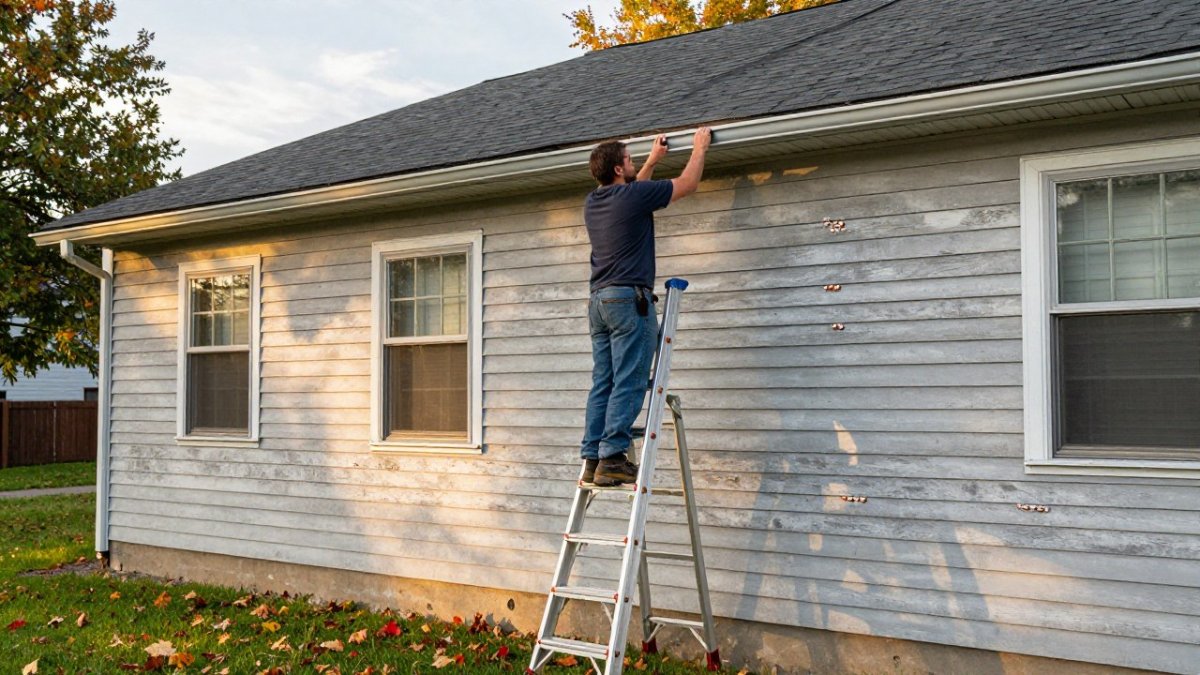
- Confirm it is safe to look. Do not climb onto a wet, steep, or storm-damaged roof. Photograph from the ground, a ladder on stable footing, or a second-story window.
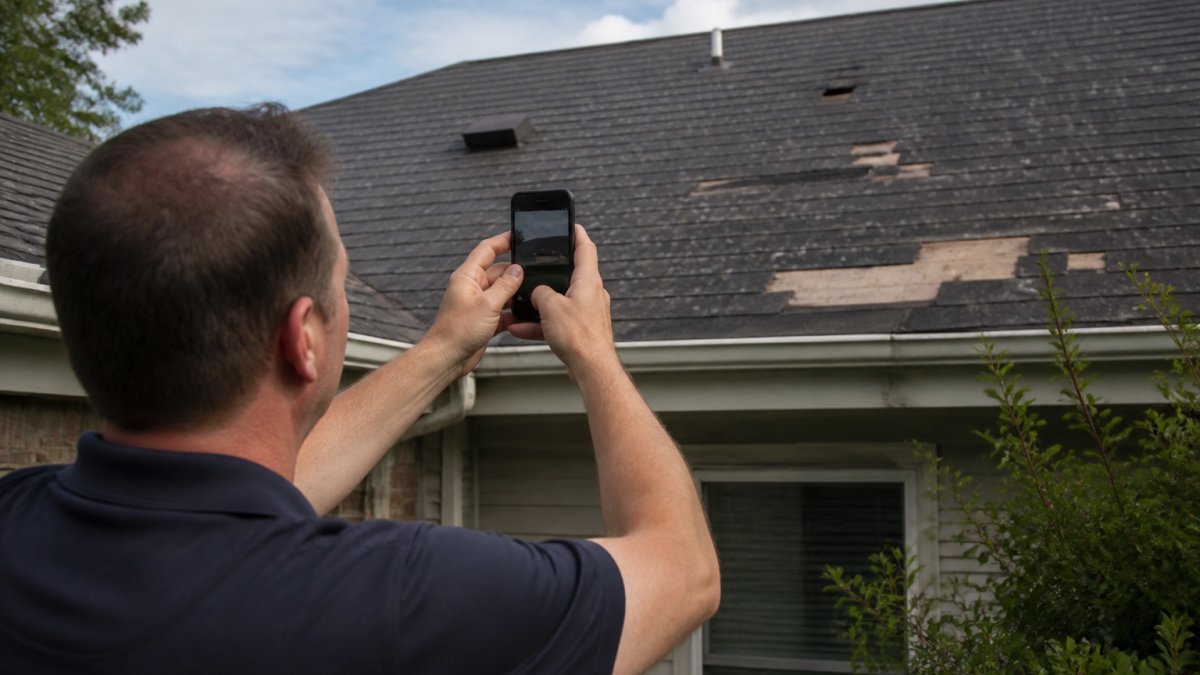
- Capture the exterior from at least four sides of the home, plus a wide shot of the full roofline.
- Photograph the ground for fallen shingles, granules, or debris indicating impact.
During the inspection phase
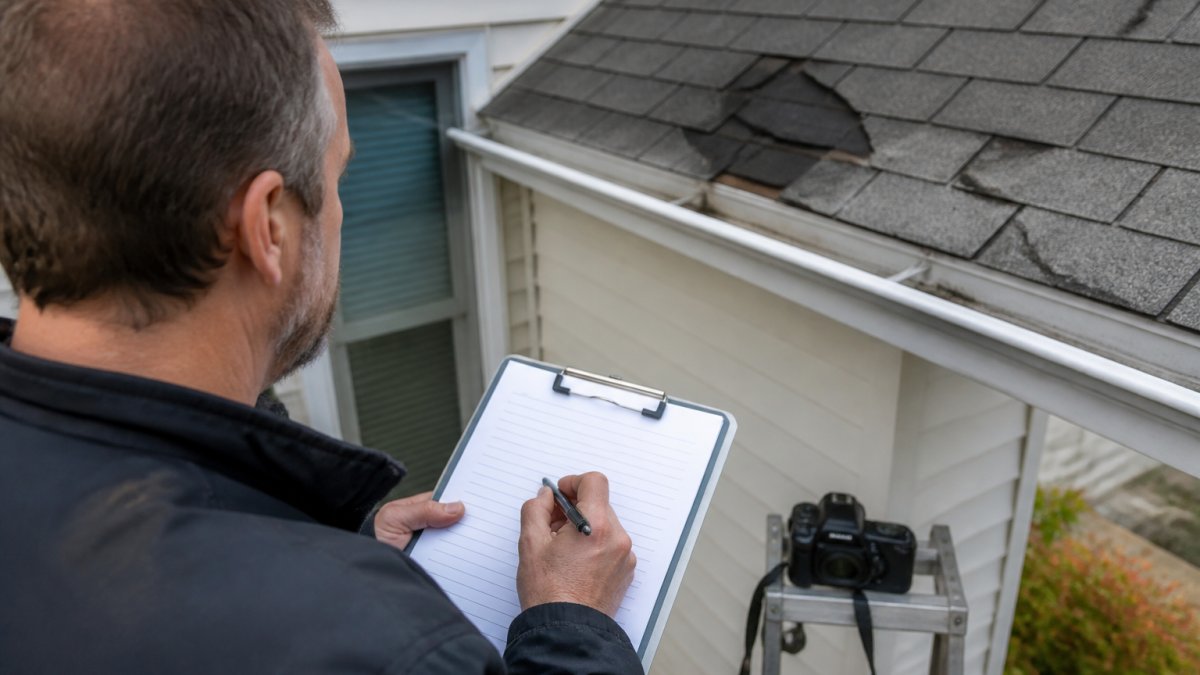
- Log every person who visits the property, with the date and what they examined.
- Photograph the same roof areas on inspection day for a matched set.
- Retain the professional inspector's written report and any photos they provide.
After the adjuster visit
- Write down what the adjuster observed and said they would include.
- Compare the adjuster's written scope against your contractor's line items.
- Note any area the adjuster did not inspect or could not access.
Photo and video evidence standards
A few deliberate photos beat a folder of random ones. Aim for three shot types per damaged area:
- Wide shots that show the area in context, which slope, which side of the house, how close to a vent or chimney.
- Close-ups that show texture and failure, cracked shingle tabs, exposed mat, granule loss, dented soft metal.
- Interior shots that connect the exterior damage to what happened inside.
For video, do one slow continuous walk-through, narrating what you see and where you stand.
Preserve original files. Phone metadata is your timestamp, and cropping, resizing, or messaging a photo can strip it.
If an area is unsafe or inaccessible, a steep pitch, a second-story valley, a section behind a solar array, don't force it.
Building an evidence log you can hand to anyone
A one-page log turns scattered photos into a defensible file. Use a simple spreadsheet with these columns:
| Date | Item | Source | What it shows | File name |
|---|---|---|---|---|
| Date damage found | Exterior photo set, north slope | You | Missing shingles after wind event | Roof_North_01.jpg |
| Date of inspection | Inspector report | Licensed inspector | Impact marks consistent with hail | Inspection_Report.pdf |
| Date of estimate | Contractor estimate | Roofing contractor | Line-item repair scope | Estimate_01.pdf |
| Date of call | Claim number and adjuster name | Insurer | Claim opened | Notes.txt |
Add a second section logging every insurer request, what they asked for, when, and when you sent it. If a dispute arises, this shows you cooperated promptly.
Label files so they sort sensibly: Roof_Damage_Front_Slope_01.jpg, not IMG_4471.jpg. Keep everything in one folder with subfolders for photos, reports, estimates, receipts, and correspondence.
Step-by-Step: Filing Your Roof Insurance Claim
The claims process follows a predictable path. Knowing each step keeps your claim moving.
Contact your insurance company immediately
Call your insurance agent or claims department as soon as you discover damage. Many policies require notification within a specific timeframe. Waiting weeks can jeopardize your claim.
When you call, provide:
- Your policy number
- Date and time damage occurred
- Type of damage (storm, hail, wind, water)
The insurer will assign a claim number and schedule an adjuster inspection. Write it down and keep it with your documentation.
Submit your initial claim with documentation
Send your photos and written summary right away. Most companies accept digital submissions through their website or app; email works too.
Include a clear letter explaining:
- When the damage occurred
- How you discovered it
- What you've documented
Keep copies of everything you send in case questions arise later.
Request a professional roof inspection
Many homeowners skip this step and regret it. A professional inspection provides objective documentation that strengthens your claim through a detailed report.
The inspector identifies:
- Specific damage locations and extent
- Whether damage matches the reported incident
- Repair or replacement recommendations
Share the report with your insurer. Adjusters trust licensed professionals, and this documentation often resolves disputes about damage severity.
How to Talk to Insurance Adjusters About Roof Damage
The adjuster inspection is the pivot point of your claim. How you prepare, what you record, and what you send afterward often matter more than what you say in the moment.
Preparing for the inspection
Treat the visit like a meeting with a purpose. Before the adjuster arrives:
- Confirm the appointment in writing and note who will attend.
- Have your evidence log, photo set, and inspection report ready in one place.
- Decide who will be on the roof with the adjuster. If your contractor or inspector can attend, their presence helps because they can point out specific conditions in real time.
Don't begin permanent repairs before the inspection. Temporary measures, a tarp, a bucket, shutting off a leak, are expected, but keep receipts and photograph the work so the adjuster can see what was original and what was mitigation.
Book my free Roof Quote Today →
Recording what the adjuster observes
You're not there to argue, you're there to build a record. As the adjuster works:
- Note which roof areas they inspect and which they do not.
- Note any area they say they cannot access or will not include.
- Note the cause they attribute to the damage, storm, wear, or something else.
Write these notes the same day, while details are fresh. A dated note in your own words is a legitimate part of your file.
Comparing the adjuster's scope with your contractor's findings
When the adjuster's written scope arrives, compare it with your contractor's line items. Watch for these common gaps:
- Missed slopes or elevations. An adjuster may document the front of the roof and not the back, or one slope and not another.
- Matched materials. If only part of the roof is replaced, new shingles may not match existing ones. Whether matching is covered depends on your policy and local requirements, so read the language carefully.
- Underlying damage. Decking, underlayment, flashing, and ventilation are easy to overlook and expensive to fix later.
Mark each missing item and note why. Then send a short written follow-up, not a phone call, listing the items, attaching supporting photos or report pages, and asking for a written response.
Following up in writing
A written follow-up creates a dated record, forces a specific response, and keeps your concerns out of a phone queue. Keep it short and factual:
- Reference your claim number and the date of the inspection.
- List each disputed or missing item on its own line.
- Attach the specific evidence for each item.
If the response doesn't address your items, resend with a brief note that the prior questions remain unanswered. Persistent, non-hostile writing most often moves a stalled claim forward.
Does Homeowners Insurance Cover Roof Replacement?
Coverage depends on your policy and the cause of damage. Knowing the distinctions prevents surprises.
Coverage for storm damage versus wear and tear
Most homeowners policies cover sudden storm damage, hail, high winds, falling trees, lightning. These are unexpected events, not gradual deterioration.
Wear and tear isn't covered. If your roof is old and deteriorating, insurance won't pay for replacement, age-related damage is your responsibility.
The distinction matters: an adjuster evaluates whether damage came from a specific storm or normal aging, and your documentation helps prove it was storm damage.
Understanding deductibles and coverage limits
Your policy includes a deductible, the amount you pay before insurance covers the rest. Common deductibles range from $500 to $2,500 (Understanding your insurance deductibles).
Your policy also has coverage limits, the maximum the insurer will pay for roof damage. Older policies may have lower limits than current replacement costs.
Knowing both figures helps you plan. If your deductible is $1,000 and repairs cost $5,000, you pay $1,000 and insurance covers $4,000.
Review your policy before filing. Knowing your deductible and coverage limits prevents surprises when payment is issued.
Handling Claim Denials and Supplemental Documentation
Not every claim gets approved on the first review. Understanding why denials happen helps you respond effectively.
Why claims get denied
Denials happen for several reasons: the adjuster may believe damage is pre-existing rather than storm-related, determine it falls outside your coverage, or question whether it exists at all.
Pre-existing damage is the most common reason. Damage that existed before the storm isn't covered, and your documentation helps prove the storm caused new damage.
Some policies exclude certain damage types, wind over a specific threshold, or water damage from poor maintenance. Review your exclusions to know what isn't covered.
Filing a supplemental claim with additional evidence
If your claim is denied, request a written explanation and ask the adjuster to specify which coverage exclusion applies.
Gather additional documentation:
- A second professional inspection
- Contractor written statement about damage cause
- Photos showing damage severity
Roof King LLC offers comprehensive insurance claim assistance to help you navigate damage documentation and repairs with ease.
A roof insurance claim feels overwhelming when you're facing damage and uncertainty, but the right documentation transforms the process.
Professional support matters. Roof insurance claim documentation requires attention to detail most homeowners haven't practiced. At Roof King LLC, we guide you through every step, professional inspections, damage assessment, and documentation adjusters trust. Contact us for a free roof quote and let us help you secure the coverage you deserve.
Frequently Asked Questions
What should I photograph to document roof damage for an insurance claim?
Take wide-angle shots showing the overall roof condition, close-ups of specific damage like missing shingles, hail impact, or leaks, and photos that include reference points such as your house number or nearby landmarks. Capture images from multiple angles and include date-stamped photos if your camera or phone supports this feature. Document interior damage like water stains or leaks as well, since adjusters use these to assess structural integrity and the full scope of damage.
How do I prepare for an insurance adjuster's inspection of my roof?
Organize all your documentation including photos, videos, written descriptions of the damage, and the date and circumstances of the storm or event. Create a timeline showing when damage occurred and when you discovered it. Have your insurance policy available to discuss coverage and deductibles. Be present during the inspection, point out all visible damage, and avoid making any statements that might minimize the damage. Take notes on what the adjuster observes and ask for a copy of their inspection findings.
Does homeowners insurance cover roof replacement after storm damage?
Most homeowners insurance policies cover roof replacement if the damage results from a covered peril such as wind, hail, or fire. However, coverage typically does not apply to damage from normal wear and tear, neglect, or gradual deterioration. Your policy will specify the deductible amount you must pay before insurance covers the rest. Review your policy documents or contact your insurance company to confirm your specific coverage limits and whether roof replacement is included under your plan.
What should I avoid saying to an insurance adjuster?
Do not downplay or exaggerate the damage, as adjusters verify claims through their own inspection. Avoid admitting fault or suggesting the damage is minor when it is significant. Do not make statements about previous roof damage or maintenance issues unless directly asked. Stick to factual descriptions of what happened, when it happened, and what damage you observed. If you don't know something, say so rather than guessing. Let your documentation and professional inspection findings speak for themselves.