 How-to
Hiring Roofers for Insurance Claim Assistance
Table of Contents
- Why Roofers Matter When Filing an Insurance Claim
- How to Document Roof Damage for Insurance
- Questions to Ask a Roofer About Insurance Claims
- What to Say to an Insurance Adjuster About Roof Damage
- Understanding Your Roof Insurance Claim Timeline
- Contractor Credentials and What to Verify Before Hiring
- Navigating Claim Denials and Partial Approvals
- Frequently Asked Questions
Last Updated: October 14, 2026
Why Roofers Matter When Filing an Insurance Claim
When storm, hail, or wind damages your roof, you need documentation, expertise, and someone who understands both roofing and insurance, which is why hiring roofers for insurance claim assistance matters so much. This is where hiring roofers for insurance claim assistance becomes critical.
A qualified roofer photographs damage correctly, writes estimates that match industry standards, and attends the adjuster inspection to answer technical questions. Without this support, homeowners often accept settlements that fall short of actual repair costs.
Whether a claim is approved quickly or drags on often comes down to the contractor you choose.
How to Document Roof Damage for Insurance
Documentation is everything in an insurance claim. Start immediately after damage occurs, but only if it's safe.
Take photos and video from multiple angles: wide shots of the roof, then close-ups of missing shingles, hail dents, torn flashing, or exposed underlayment. Include a coin, ruler, or your hand for scale, and photograph the surrounding area so adjusters see the damage pattern.
Write down what happened and when: storm date, wind speed if known, and damage type. Document interior damage like water stains, leaks, or damaged insulation, which strengthens your claim.
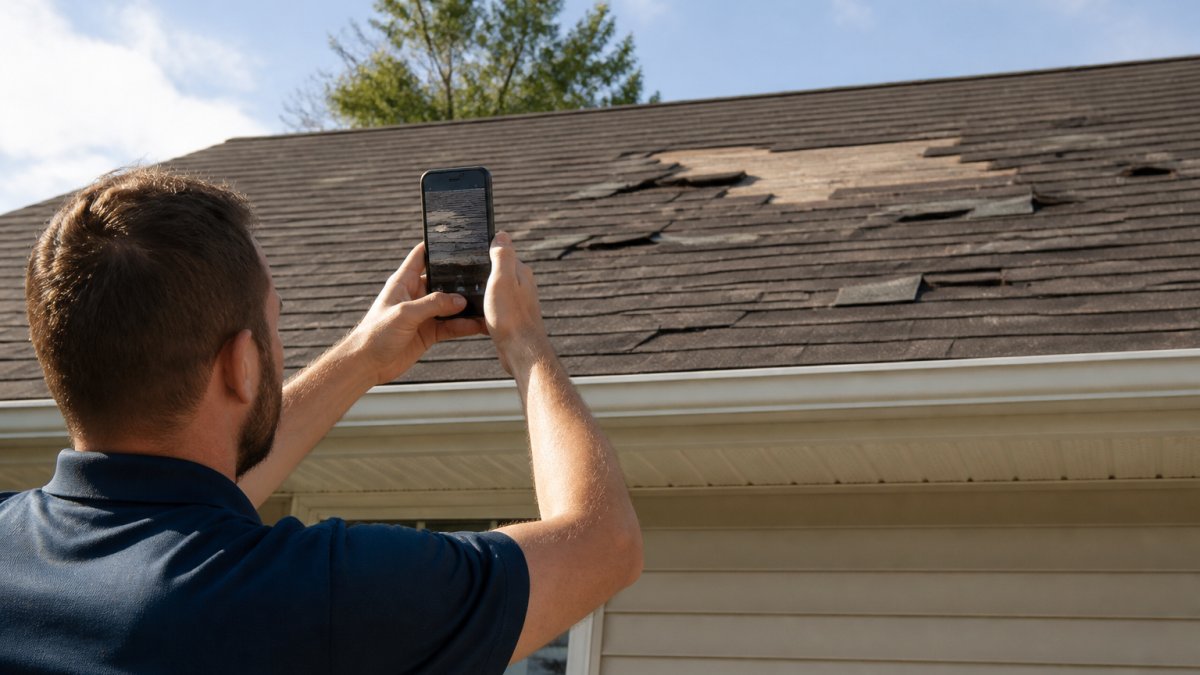
Keep photos, videos, and notes in one folder, and save receipts for emergency repairs made to prevent further damage, since these are often covered.
Questions to Ask a Roofer About Insurance Claims
Most guides tell you to ask whether the roofer has claim experience. That is table stakes. The questions that actually protect you concern the contract, the scope of work behind the estimate, and the line between what a roofer can do and what belongs to a licensed public adjuster or attorney.
Start with the contract, not the roof. Before signing, get the agreement in writing and read it for these terms:
- Cancellation rights. What is the cancellation window, and is it in the contract? Many states give homeowners a right to cancel within a set number of days, and some give extra time after a storm-related solicitation.
- Contingency language. Does the contract make your obligation to pay contingent on the insurer approving the claim? A contingency clause protects you if the claim is denied; without one, you could owe for work the insurer never covered.
- Assignment of benefits (AOB). Some contracts transfer your right to collect insurance proceeds to the contractor. If the agreement contains an AOB clause, you are handing over control of the claim, and many states have restricted or banned AOB for residential roof work. If uncomfortable, ask for it to be removed.
- Payment schedule and deposits. What is due at signing, at material delivery, and at completion? A large upfront deposit is a red flag. Confirm the roofer is not offering to waive or absorb your deductible, which is generally prohibited and can void your claim.
- Authorization language. What are you authorizing the roofer to do on your behalf, and with whom can they communicate? Authorize documentation and adjuster attendance, not settlement decisions.
Then compare the scope of work, line by line. Two estimates can look similar at the bottom and differ wildly in what they include. Check for:
- Materials and quantities. Are the same shingle type, underlayment, and square count listed? A lower-tier shingle or fewer squares explains a lower number.
- Labor and tear-off. Is removal of the old roof included, or only installation?
- Code upgrades. Are items like ice-and-water shield, drip edge, or decking replacement included? These are frequently missed on the first pass and a common source of supplements.
- Ventilation and flashing. Ridge vents, pipe boots, and step flashing are small line items that add up and are often omitted.
- Hidden damage allowances. Is there a stated process for handling rotten decking or damaged framing found after tear-off?
Know the boundary between roofer and public adjuster. A roofing contractor can document damage, prepare a repair estimate, and attend the adjuster inspection to explain technical findings. Negotiating your settlement, interpreting your policy, or representing you in a dispute typically requires a licensed public adjuster or attorney, and rules vary by state.
Verify credentials before you sign. Confirm the state license number is current on your licensing board site, and call the carrier to confirm general liability and workers' compensation policies are active. Ask for two or three recent insurance claim references, and whether the roofer attended the adjuster inspection and how supplements were handled.
Consumer resources on home improvement contracts and licensing
What to Say to an Insurance Adjuster About Roof Damage
Your adjuster is not your enemy, but they're not your advocate either. Their job is to assess damage fairly and control costs for the insurer. Be clear, honest, and organized.
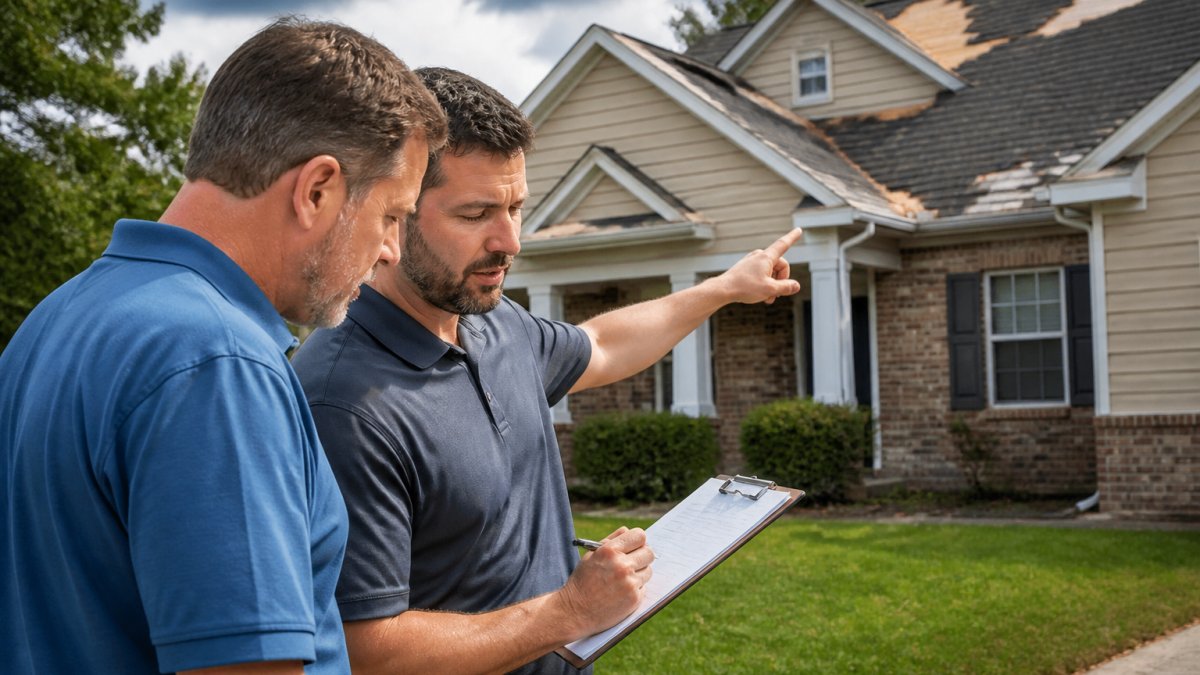
Walk the adjuster through the damage in person, pointing out specific areas.
Bring your documentation: photos and video from right after the damage, plus your roofer's written estimate. These give the adjuster a complete picture and prevent misunderstandings.
Be factual. Stick to what you observed and what the roofer documented, and don't speculate or exaggerate; adjusters spot inconsistencies quickly. If unsure, say so, and let your roofer fill in technical details.
Ask the adjuster to explain their assessment. If they find unexpected damage, ask them to show you; if they say damage isn't covered, ask why. Understanding their reasoning helps you decide whether to accept or appeal.
Get everything in writing. After the inspection, request a written summary of what the adjuster found, what's covered, and the estimated payout. Don't rely on verbal promises.
Understanding Your Roof Insurance Claim Timeline
Insurance claims don't move overnight, and the calendar most homeowners picture, file, inspect, get paid, misses the step that trips people up: how the money is calculated and released. Understanding both the clock and the payment mechanics keeps you from being surprised when the first check is smaller than the estimate.
The typical sequence. Filing usually takes one to two weeks once you have photos, notes, and a contractor's line-item estimate. The insurer then schedules the adjuster inspection, commonly within two to four weeks.
Where the money comes from, and why the first check is smaller. Most policies reimburse roof damage on an actual cash value (ACV) or replacement cost value (RCV) basis. ACV pays the depreciated value of an aged roof.
Book my free Roof Quote Today →
Your deductible is not reimbursed. The deductible is your share of the loss, and the carrier subtracts it from the payout.
What actually slows a claim down. Incomplete documentation, a scope of work that doesn't match the carrier's pricing platform, missed code-upgrade items, and disputes over whether damage is storm-related or pre-existing.
| Stage | Typical Duration | What Happens |
|---|---|---|
| Filing | 1-2 weeks | Submit claim with documentation and contractor estimate |
| Scheduling | 1-2 weeks | Insurer assigns and schedules the adjuster |
| Inspection | 1 day | Adjuster assesses damage on-site; roofer present if possible |
| Review | 2-4 weeks | Carrier reviews report and applies policy terms |
| Decision | 1 day | Written settlement offer issued (ACV or RCV basis) |
| First payment | 1-2 weeks | Initial payment released, minus deductible |
| Recoverable depreciation | After completion | Second payment released on proof of completed work (RCV policies) |
How homeowners insurance claims and depreciation work
Contractor Credentials and What to Verify Before Hiring
Credentials protect you legally and ensure your claim stands up to scrutiny.
Verify licensing first. Ask for the license number and confirm on your state's licensing board site that it is current and in good standing. If disciplinary actions are on record, ask about them.
Request proof of insurance. A contractor should carry general liability and workers' compensation coverage; call the insurer to verify it's active. If a worker is injured on your property and the contractor is uninsured, you could be liable.
Check references and reviews. Call recent customers and ask specifically about insurance claim assistance: were photos and estimates professional, did the contractor attend the adjuster inspection, and was the work completed on time?
Look for industry certifications. Manufacturer training or roofing association certifications don't guarantee quality, but they show commitment to the trade.
Ask about experience with your roof type. Asphalt shingles, metal, tile, and flat roofs all have different repair and replacement processes, and a contractor experienced with yours will work more efficiently.
Navigating Claim Denials and Partial Approvals
Not every claim gets approved in full. Sometimes adjusters deny coverage entirely. Other times they approve only part of the damage. Understanding why helps you decide your next move.
Denials often happen because damage falls outside your policy coverage, such as excluded damage types or damage from poor maintenance.
Partial approvals occur when the adjuster agrees some damage is covered but not all, perhaps because they believe some damage pre-existed the storm or assess it differently than your roofer.
Supplemental claims are your tool for disputes.
Some denials are final.
Working with a roofer experienced in insurance claim assistance helps here.
Filing a roof damage claim doesn't have to feel overwhelming. The right roofer transforms the process from stressful and uncertain into organized and manageable.
At Roof King LLC, we help homeowners in Lenawee and Jackson County navigate roof damage claims with confidence. We're transparent about timelines and deductibles. Book your free roof quote today.
Frequently Asked Questions
Should I contact a roofer or my insurance company first after roof damage?
Contact your insurance company first to report the damage and initiate the claims process. Your insurer will schedule an adjuster inspection. Once the claim is filed, you can hire a roofing contractor to document damage, provide an estimate, and support your claim. Many roofers assist with this documentation, but your insurance company must receive notice before work begins to protect your coverage.
What should I avoid saying to an insurance adjuster about roof damage?
Avoid exaggerating damage, guessing at repair costs, or making statements like 'the roof is completely ruined' without specifics. Don't admit fault or suggest the damage is unrelated to the covered event (storm, hail, wind). Stick to factual descriptions: 'I noticed missing shingles and water stains after the hailstorm.' Let the adjuster and your contractor's documentation speak for themselves. Avoid saying the damage happened before the incident date or that you've already started repairs.
Can a roofer document storm damage for an insurance claim?
Yes. Licensed roofing contractors can photograph damage, create detailed inspection reports, and provide written estimates that document the scope of work needed. These reports carry weight with insurance adjusters because they come from qualified professionals. However, the roofer's assessment is one piece of evidence; the insurance adjuster makes the final determination. Ensure your roofer provides clear, timestamped photos and itemized estimates that reference specific damage locations and repair requirements.
What happens if the insurance adjuster and roofer disagree about roof damage?
If the adjuster's estimate differs significantly from your roofer's, you can file a supplemental claim with additional documentation, request a second adjuster inspection, or pursue an independent appraisal (covered under most homeowners policies). Your roofer can provide a detailed written rebuttal explaining why their assessment differs. Document all discrepancies in writing. Many policies allow you to challenge underpayments through the appraisal process before accepting the insurer's decision.